
Content creation is no longer limited to writing a blog post, recording a video, or designing a beautiful image. Today, creators also need to think about publishing schedules, audience engagement, content distribution, traffic generation, and long-term growth. 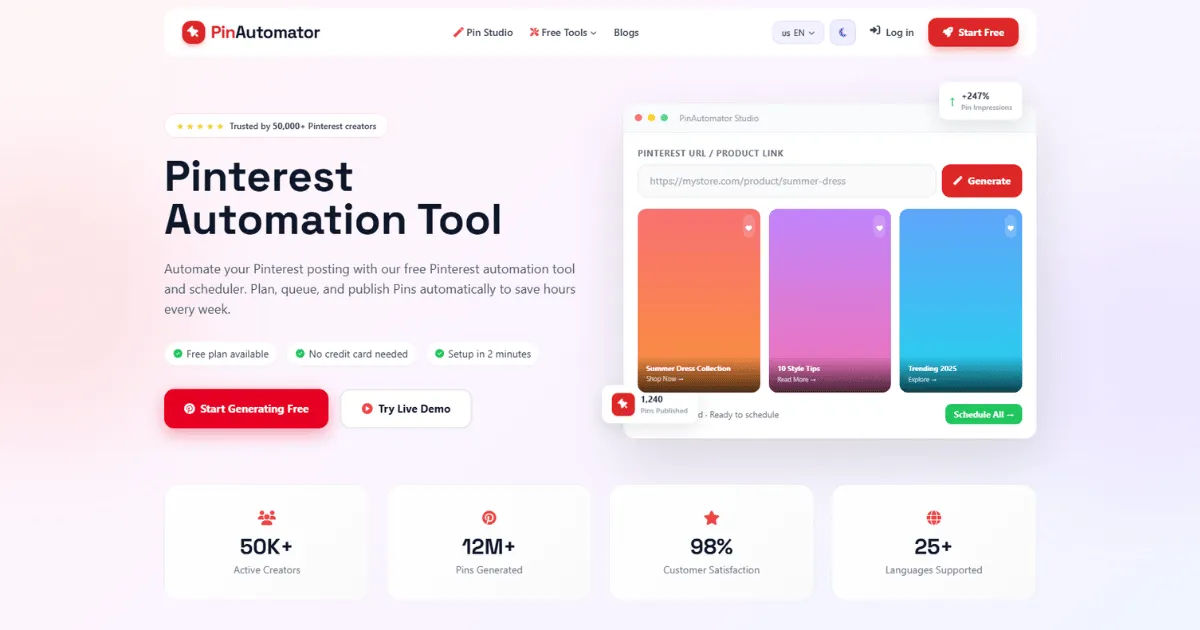 Managing all these responsibilities can become difficult, especially when a creator is active on multiple platforms. This is where a Pinterest Scheduler can become a valuable part of a content marketing strategy.
Pinterest is a visual discovery platform where users search for ideas, inspiration, products, tutorials, recipes, travel destinations, and solutions to everyday problems. Unlike many social platforms where content can disappear quickly from users' feeds, Pinterest content can continue attracting attention long after it is published. For content creators, this makes Pinterest an important channel for driving consistent website traffic and reaching new audiences.
However, maintaining a strong Pinterest presence requires regular activity. Creators may need to prepare multiple pins, write descriptions, select appropriate boards, add links, and publish content at strategic times. Doing all of this manually can consume a significant amount of time. A Pinterest Schedulerhelps simplify this process by allowing creators to plan and organize their Pinterest content in advance.
By scheduling content ahead of time, creators can spend less time performing repetitive publishing tasks and more time focusing on creating valuable content. Whether someone is a blogger, YouTuber, online educator, affiliate marketer, photographer, designer, coach, or small business owner, scheduling can make Pinterest marketing more organized and manageable.
Understanding how to use scheduling effectively can help creators build consistency, improve workflow efficiency, and develop a more reliable content distribution strategy.
What Is a Pinterest Scheduler?
A Pinterest Scheduler is a tool or platform that allows content creators to plan Pinterest posts and publish them automatically or according to a predefined schedule. Instead of manually visiting Pinterest every time they want to publish a new pin, creators can prepare their content in advance.
Depending on the platform, scheduling tools may offer different features. Some allow users to upload images, write descriptions, add destination URLs, select boards, and choose publishing dates. More advanced solutions may provide analytics, content calendars, bulk scheduling, campaign management, and performance tracking.
The basic idea is simple. A creator prepares content once and chooses when it should be published. The scheduling system then handles the publishing process according to the selected plan.
This can be particularly useful for creators who want to maintain a consistent presence without spending every day managing Pinterest manually.
For example, a food blogger may create ten recipe pins on Sunday. Instead of publishing all ten pins at once, the creator can organize them across several days. This approach creates a more structured publishing routine and gives each piece of content an opportunity to reach Pinterest users.
A scheduler does not replace the creative process. Instead, it helps creators manage the distribution side of content marketing more efficiently.
Why Pinterest Matters to Content Creators
Pinterest is different from many traditional social media platforms because users often visit with a specific intention. They may be searching for a new recipe, planning a home renovation, looking for fashion inspiration, researching a travel destination, or trying to learn how to complete a project.
This search-driven behavior creates opportunities for creators.
A well-designed pin can introduce a user to a creator's blog, website, online store, newsletter, video channel, or digital product. If the content provides genuine value, the visitor may become a regular audience member.
Pinterest can also support long-term content discovery. A blog post published months ago may continue receiving visits if its associated pins remain relevant and discoverable.
For creators, this means Pinterest can become more than a place to share content. It can function as a distribution channel that helps connect existing content with new audiences.
The challenge is maintaining consistent publishing activity. Creating content itself already requires time and effort. Adding daily manual Pinterest management can make the workload even heavier.
A Pinterest Scheduler can help solve this problem by separating content creation from content distribution.
How Content Creators Can Plan Content in Advance
One of the most useful ways creators can use a Pinterest Scheduler is by planning content ahead of time.
Instead of deciding what to publish every morning, creators can create a content calendar for the week or month. They can identify upcoming blog posts, videos, products, seasonal topics, and evergreen content that deserve promotion.
For example, a lifestyle creator might plan content around several categories:
-
Weekly blog posts
-
Seasonal guides
-
Evergreen tutorials
-
Product recommendations
-
Inspirational content
-
Video content
-
Lead magnets
-
Special promotions
Once these categories are organized, the creator can prepare relevant pins and schedule them throughout the month.
This approach reduces the pressure of daily decision-making. The creator already knows what needs to be published and when.
Planning in advance also makes it easier to maintain a balanced content mix. Instead of promoting the same article repeatedly, creators can distribute different topics across their publishing calendar.
A well-organized schedule can make Pinterest marketing feel less reactive and more strategic.
How a Pinterest Scheduler Saves Time
Time management is one of the biggest reasons creators use scheduling tools.
Content creators often have many responsibilities. They may need to research topics, write articles, record videos, edit photographs, answer emails, manage social media, communicate with clients, and analyze business performance.
Manually publishing every Pinterest post adds another task to an already busy schedule.
A scheduler can reduce this workload by allowing creators to prepare multiple posts in one session.
For example, instead of spending fifteen minutes each day publishing individual pins, a creator might spend one hour every Sunday preparing the entire week's content.
This process is known as batch scheduling.
Batch scheduling can be especially useful for creators who prefer working in focused sessions. Once the content is prepared, the creator can concentrate on other priorities while the scheduled posts are published according to the plan.
The time saved can then be invested in higher-value activities, such as creating better content, researching audience needs, improving website design, or developing new products.
How Creators Can Maintain Consistent Posting
Consistency is important for building an online presence.
However, consistency does not necessarily mean publishing manually every single day. It means creating a reliable publishing system that keeps content moving regularly.
A Pinterest Scheduler can help creators maintain that consistency.
Suppose a creator becomes busy for several days because of work, travel, exams, or personal responsibilities. Without a scheduling system, Pinterest activity may stop completely.
With scheduled content, previously prepared posts can continue publishing according to the creator's plan.
This creates a more stable presence.
Consistency can also make content management less stressful. Creators do not have to worry about remembering every publishing task because the schedule has already been organized.
The goal is not simply to publish as much content as possible. The goal is to create a sustainable system that supports regular and valuable publishing over time.
How to Promote Blog Posts With Scheduling
Bloggers can use a Pinterest Scheduler to promote their articles more effectively.
When a new blog post is published, the creator can design several pins that highlight different aspects of the same article.
For example, a travel blogger publishing an article about visiting a particular city might create pins focusing on:
-
Best places to visit
-
Travel tips
-
Budget advice
-
Things to do
-
Where to stay
-
Best time to visit
Each pin can lead to the same article while presenting a different angle.
Scheduling these pins over time allows the creator to continue promoting the article instead of relying on a single publishing moment.
This is particularly useful for evergreen blog content.
An article that remains relevant for months or years can continue to be promoted through carefully planned pins. The creator can periodically review performance and update the content when necessary.
This strategy helps maximize the value of existing content.
How Video Creators Can Use Pinterest Scheduling
Pinterest is not only useful for bloggers. Video creators can also use it to distribute their content.
YouTubers, educators, course creators, and other video professionals can create visual pins that direct users to videos or related landing pages.
For example, a fitness creator might publish a workout video and create several pins based on the same topic.
One pin could focus on the workout routine. Another could highlight beginner tips. A third might promote a specific exercise guide.
The creator can then schedule these pins across different dates.
This allows one video to generate multiple promotional opportunities without requiring the creator to create an entirely new video for every post.
The same principle can work for podcasts, webinars, online courses, and educational videos.
The key is to make each promotional pin useful and relevant rather than simply duplicating the same message repeatedly.
How Creators Can Schedule Seasonal Content
Seasonal content is highly valuable on Pinterest because users often search for ideas before an event, holiday, or particular time of year.
Creators can use a Pinterest Scheduler to prepare seasonal campaigns well in advance.
For example, a creator in the food niche may prepare content for:
-
New Year celebrations
-
Valentine's Day
-
Ramadan
-
Eid
-
Summer gatherings
-
Back-to-school season
-
Halloween
-
Thanksgiving
-
Christmas
The exact schedule depends on the creator's audience and location.
Preparing seasonal content early gives creators more time to build visibility before the relevant date arrives.
If a creator waits until the actual holiday to start publishing, the content may have less time to reach people who are already planning.
Scheduling allows the creator to think ahead and create a campaign rather than a single post.
This can make seasonal marketing more organized and effective.
How to Use Scheduling for Evergreen Content
Evergreen content remains useful over a long period.
Examples include tutorials, educational guides, recipes, checklists, how-to articles, beginner resources, and practical tips.
A Pinterest Scheduler can help creators distribute evergreen content consistently.
Instead of publishing an evergreen article once and forgetting about it, creators can develop multiple visual approaches for the same piece of content.
A tutorial about organizing a home, for example, could have different pins focused on:
-
Small-space organization
-
Decluttering tips
-
Storage ideas
-
Beginner organization methods
-
Room-by-room organization
Each pin can attract a slightly different audience or search intent.
The creator can schedule these variations over time while ensuring that the content remains useful and relevant.
This approach allows creators to get more value from their existing work.
How Creators Can Organize Content Categories
Another effective use of a Pinterest Scheduler is content organization.
Creators often cover multiple topics within their niche. Without a clear system, their Pinterest activity can become disorganized.
A scheduling tool can help them build a structured content calendar based on categories.
For example, a personal finance creator might organize content into:
-
Budgeting
-
Saving money
-
Investing
-
Debt management
-
Side hustles
-
Financial planning
The creator can assign different publishing days or weeks to each category.
This makes it easier to maintain variety while ensuring that important topics receive regular attention.
Content categories can also help creators identify gaps in their strategy. If one topic has not been promoted for several weeks, the creator can add it to the upcoming schedule.
Organization becomes particularly important as a creator's content library grows.
How to Create a Pinterest Scheduling Workflow
A successful scheduling strategy begins with a repeatable workflow.
The first step is content selection.
Creators should identify the articles, videos, products, or resources they want to promote.
The second step is visual creation.
Each piece of content should have attractive and relevant pin designs. The design should clearly communicate what the user can expect after clicking.
The third step is writing the pin information.
This may include a title, description, relevant keywords, and destination URL.
The fourth step is selecting the appropriate board or category.
The fifth step is choosing a publishing date.
Finally, the creator should review the schedule before activating it.
A simple weekly workflow might look like this:
Monday can be used for content research.
Tuesday can focus on graphic design.
Wednesday can be dedicated to writing descriptions.
Thursday can be used for scheduling.
Friday can focus on reviewing analytics.
This kind of workflow makes Pinterest management more predictable.
How to Use Analytics With a Pinterest Scheduler
Scheduling alone does not guarantee success.
Creators should also monitor how their content performs.
Analytics can help identify which pins receive impressions, clicks, saves, and engagement.
A creator may discover that certain topics consistently perform better than others.
For example, a home decor creator might notice that small-bedroom ideas receive significantly more clicks than general decorating posts.
This information can influence future content planning.
Analytics can also reveal which visual designs attract attention. If vertical images with clear text perform better, the creator can incorporate similar design principles into future pins.
The goal is to use data to improve decisions.
Creators should avoid judging their strategy based on a single post. Pinterest performance can vary, and some content may take time to gain visibility.
Instead, creators should look for patterns over a longer period.
How to Improve Content With Scheduling Data
A Pinterest Scheduler can become more valuable when combined with performance analysis.
Suppose a creator notices that certain pins receive many impressions but few clicks.
This may indicate that the visual is attracting attention but the message is not convincing users to visit the linked content.
The creator might improve the headline, make the benefit clearer, or create a stronger visual design.
On the other hand, if a pin receives clicks but few saves, the creator might consider whether the content is useful enough for users to keep for later.
Data can help creators understand what their audience responds to.
This creates a continuous improvement cycle.
Create content.
Schedule it.
Measure performance.
Learn from the results.
Improve future content.
Repeat the process.
Over time, this approach can produce a more effective Pinterest strategy.
How Small Creators Can Benefit From Scheduling
Scheduling is not only for large businesses.
Small creators may benefit even more because they often have limited time and resources.
A solo blogger may be responsible for writing every article, designing every graphic, managing a website, answering emails, and handling social media.
A scheduling system can reduce the amount of repetitive work involved in Pinterest management.
This allows small creators to compete more effectively by maintaining a consistent presence without needing a large marketing team.
The important thing is to create a realistic schedule.
A small creator should not feel pressured to publish more content than they can produce responsibly.
A manageable publishing routine is usually better than an ambitious schedule that becomes impossible to maintain.
How Agencies and Teams Can Use Scheduling
Content agencies and marketing teams can also benefit from scheduling tools.
When multiple people work on Pinterest content, coordination becomes important.
A team may have one person creating graphics, another writing descriptions, and another reviewing analytics.
A scheduling system can help organize these responsibilities.
Team members can work from a shared content calendar and maintain a clear publishing schedule.
This reduces the risk of publishing duplicate content or forgetting important campaigns.
For agencies managing multiple client accounts, scheduling can also help separate campaigns and workflows.
However, teams should always follow Pinterest's rules and use appropriate account management practices.
Automation should support responsible content management rather than encourage spam or low-quality publishing.
How Affiliate Marketers Can Use Scheduling
Affiliate marketers often use Pinterest to promote helpful content that includes product recommendations.
For example, an affiliate marketer might create articles about:
-
Best products for beginners
-
Buying guides
-
Product comparisons
-
Gift ideas
-
Helpful tools
-
Lifestyle recommendations
A scheduling tool can help distribute pins that direct users to these resources.
The most effective approach is to focus on providing genuine value.
Instead of creating pins that exist only to promote products, creators should publish useful guides that answer real questions.
The content should be transparent about affiliate relationships where required.
A scheduling system can then help maintain consistent promotion of these resources.
How to Avoid Over-Scheduling
Although scheduling provides many benefits, creators should avoid treating automation as a reason to publish excessive amounts of content.
Publishing too frequently without a clear strategy can reduce content quality.
Creators should focus on relevance, originality, and audience value.
They should also avoid creating repetitive content that provides little additional value.
A good scheduling strategy should feel intentional.
Every scheduled pin should have a purpose.
It may promote a new article, introduce an evergreen resource, support a seasonal campaign, or direct users to a valuable video.
Before scheduling a post, creators should ask whether the content is useful to their audience.
If the answer is no, it may not deserve to be published.
How to Maintain a Human Approach
Automation can save time, but creators should not completely remove the human element from their Pinterest strategy.
Scheduled content should still reflect the creator's voice and personality.
Descriptions should be written naturally.
Visuals should be designed for real people rather than created only to manipulate algorithms.
Creators should also regularly review their accounts.
If a scheduled campaign becomes outdated or circumstances change, the content should be adjusted.
For example, a product may become unavailable, a link may change, or a seasonal offer may expire.
Scheduling should make content management easier, not eliminate responsibility.
The best results usually come from combining automation with human oversight.
How to Choose the Right Pinterest Scheduler
Creators should consider several factors when selecting a scheduling tool.
The first consideration is ease of use.
A complicated system may create more work instead of reducing it.
The second consideration is scheduling flexibility.
Creators should be able to choose dates and times that fit their content strategy.
The third consideration is analytics.
Performance information can help creators make better decisions.
The fourth consideration is content organization.
A useful calendar or queue can make it easier to see upcoming publications.
Creators should also consider whether the tool supports the features they actually need.
A beginner may only require basic scheduling.
A growing creator may need analytics and content planning.
A marketing team may require collaboration features.
The right tool depends on the creator's goals, workload, and budget.
Common Mistakes Creators Should Avoid
One common mistake is scheduling content without a strategy.
A calendar full of posts does not automatically create meaningful results.
Creators should know what they are trying to achieve.
Another mistake is using the same design and message repeatedly.
Even when promoting the same piece of content, creators should consider creating fresh, relevant visuals.
Ignoring analytics is another problem.
Creators who never review performance may miss valuable insights.
They may continue publishing content that does not work while overlooking topics that perform well.
Another mistake is focusing entirely on quantity.
More pins do not always mean better results.
Quality, relevance, consistency, and audience intent are more important than simply increasing the number of publications.
How to Build a Sustainable Pinterest Strategy
A sustainable strategy should match the creator's available time and resources.
Creators should begin by identifying how much content they can realistically create.
They can then determine how often they want to publish.
The next step is developing a content calendar.
The calendar should include a mixture of new and evergreen content.
Seasonal topics can be added when appropriate.
Once the content is prepared, the creator can use a Pinterest Scheduler to organize the publishing process.
After publishing begins, performance should be reviewed regularly.
The creator can then adjust the strategy based on real results.
This process creates a system that can grow over time.
The most important thing is consistency.
A simple strategy that can be maintained for six months is usually more valuable than an aggressive plan that lasts only two weeks.
A Practical Example of a Creator's Scheduling Strategy
Consider a fictional food blogger who publishes four new recipes every month.
Without a scheduling system, the blogger might publish each recipe once and then move on to the next project.
With a Pinterest Scheduler, the blogger can create a more organized campaign.
For each recipe, the creator might design several unique pins focusing on different benefits or search topics.
The first pin could be published shortly after the recipe goes live.
Additional pins could be scheduled later, provided they offer meaningful variation and remain relevant.
The creator can also schedule seasonal recipes ahead of major holidays.
At the end of each month, the blogger reviews analytics.
If quick dinner recipes perform especially well, the creator can produce more content in that category.
This simple system connects content creation, scheduling, promotion, and analysis.
How Scheduling Supports Long-Term Growth
Long-term growth rarely comes from one viral post.
For many creators, growth comes from building a large library of useful content and consistently connecting that content with the right audience.
Pinterest can support this process because older content may continue to attract attention.
A scheduling system helps creators maintain the steady promotion needed to support that content library.
Over time, a creator may have hundreds of blog posts, videos, tutorials, or resources.
Each piece of content represents a potential opportunity to reach a new audience.
The challenge is managing that growing library.
A Pinterest Scheduler can help creators organize promotional activity so that valuable content does not disappear from their marketing efforts.
This creates a more sustainable approach to content distribution.
Conclusion
Content creators can use a Pinterest Scheduler to make Pinterest marketing more organized, consistent, and manageable. Instead of manually publishing every piece of content, creators can prepare pins in advance and build a structured publishing routine that supports their broader content strategy.
The biggest advantage is often time savings. Creators spend significant amounts of time researching, writing, filming, designing, editing, and communicating with their audiences. Scheduling can reduce repetitive publishing tasks and allow more time for creative work and strategic planning.
A scheduling system can also help creators maintain consistency. Whether someone manages a blog, YouTube channel, online business, affiliate website, or personal brand, regular content distribution can help keep their resources visible to potential audiences.
Creators can use scheduling for many different purposes. They can promote new blog posts, distribute evergreen content, support seasonal campaigns, promote videos, organize content categories, and manage large libraries of existing resources. Small creators can use scheduling to manage limited time, while larger teams can use it to coordinate campaigns and publishing responsibilities.
However, successful Pinterest marketing requires more than simply automating posts. Creators should focus on useful content, attractive visuals, relevant descriptions, and a clear understanding of their audience. They should also review analytics regularly to identify what works and adjust their strategy accordingly.
The best approach is to combine automation with human judgment. A Pinterest Scheduler can handle repetitive publishing tasks, but creators remain responsible for deciding what content deserves attention and how it should be presented.
Ultimately, scheduling should support a creator's overall content strategy rather than become the strategy itself. When used thoughtfully, it can help transform Pinterest management from a daily task into a structured workflow. By planning content in advance, maintaining consistency, analyzing results, and continually improving their approach, content creators can use Pinterest more efficiently while focusing their energy on what matters most: creating valuable content for their audience.