
When choosing custom salon aprons, pockets are one of those small details that can make a surprisingly big difference. A salon apron is not only about displaying a logo, brand name, or professional color scheme. It also needs to work during a busy day when stylists, barbers, nail technicians, and beauty professionals need quick access to essential tools.
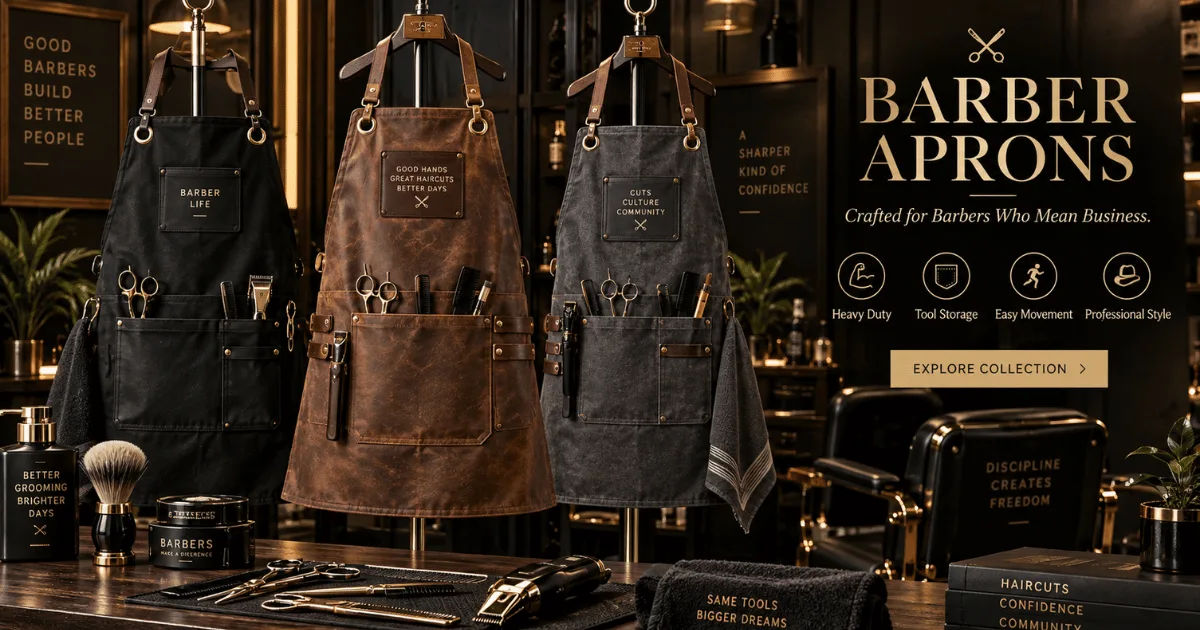
The good news is that many custom salon aprons can be made with pockets. However, pockets are not automatically included in every design. Their availability depends on the apron style, manufacturer, customization options, and the specific requirements of the salon.
If you are ordering aprons for a team, understanding pocket options before placing the order can help you choose a design that looks professional while remaining practical.
Are Pockets Included With Custom Salon Aprons?
In many cases, yes. Custom salon aprons are available with different pocket configurations, including front pockets, divided utility pockets, chest pockets, and larger storage compartments.
However, you should not assume that every apron comes with pockets. Some simple apron styles are designed mainly for protection and branding. These may have a clean, minimal appearance without any storage.
When ordering, check the product specifications carefully. If the description does not mention pockets, ask the supplier whether they can be added as part of the customization.
This is especially important when ordering a large quantity for a salon team. Adding pockets after production may not always be possible.
Why Do Salon Aprons Need Pockets?
A salon professional often works with several small items throughout the day. Having a pocket nearby can make those items easier to access without walking back to a workstation.
For example, a stylist may need clips, combs, sectioning tools, hair ties, or small accessories. A barber might want quick access to clips or other lightweight items.
Pockets can also be useful for holding a phone, appointment notes, pen, or other small personal items when appropriate.
The main advantage is convenience. Instead of repeatedly searching for small items or leaving them on a workstation, professionals can keep selected essentials close at hand.
Pockets Improve Workflow
A busy salon involves constant movement. Professionals may move between styling chairs, sinks, reception areas, and product stations.
A well-designed pocket allows frequently used lightweight items to stay within reach. This can save small amounts of time throughout the day.
Those seconds may seem insignificant, but they can add up during a fully booked schedule.
Pockets Add Functionality Without Changing the Basic Apron
A pocket does not have to make an apron bulky. A thoughtfully designed pocket can be integrated into the apron while maintaining a clean professional appearance.
This is one reason pocket placement matters just as much as the number of pockets.
What Types of Pockets Are Available?
There is no single standard pocket design for salon aprons. Different manufacturers offer different options.
Before ordering custom salon aprons, consider how the aprons will actually be used. The best pocket design is usually the one that matches the tools your team regularly carries.
Front Pockets
Front pockets are among the most common options.
They are generally easy to reach and can be positioned around the waist or lower torso. A large front pocket may provide enough room for several small items.
However, very deep pockets are not always ideal. Items can become difficult to find, especially when multiple tools are placed inside.
Divided Utility Pockets
A divided pocket can be more practical than one large compartment.
Instead of placing everything together, the pocket can have separate sections for items such as combs, clips, pens, or small accessories.
This arrangement helps keep tools organized and reduces the need to search through one crowded compartment.
Chest Pockets
Some apron styles include a smaller chest pocket.
This can work well for lightweight items such as pens, cards, or small accessories. It is usually not intended for bulky tools.
Chest pockets can also contribute to a more structured, workwear-inspired appearance.
Double or Multiple Pockets
Some professionals prefer aprons with more than one pocket.
For example, one pocket can be used for personal essentials while another holds work-related items.
Multiple pockets can be helpful for busy professionals, but adding too many can make an apron look crowded. The goal should be useful storage rather than maximum storage.
Where Should Pockets Be Placed?
Pocket placement is an important consideration when designing custom salon aprons.
A pocket that looks good in a product photograph may not necessarily be comfortable during a full day of work.
Waist-level pockets are usually easy to reach, but they should not interfere with movement. Chest pockets can be convenient for lightweight items, while lower pockets may provide more room.
Think about how the wearer moves throughout the day.
If a stylist bends frequently, a very full lower pocket could become uncomfortable. If the wearer works with tools positioned around the waist, pockets in that area may be more practical.
What Should You Keep in a Salon Apron Pocket?
A pocket should generally hold lightweight, frequently needed items rather than every tool a professional owns.
Possible items include:
- Pens
- Hair clips
- Hair ties
- Small combs
- Appointment notes
- Small accessories
- A phone, if appropriate
- Other lightweight salon essentials
The exact contents depend on the profession and workplace.
A stylist may have different needs from a nail technician or barber. That is why pocket design should be considered alongside the actual daily routine of the team.
Can You Customize the Number of Pockets?
Depending on the supplier, you may be able to select the number and style of pockets when ordering custom salon aprons.
Some manufacturers offer standard pocket configurations. Others may allow customers to request specific arrangements.
Customization might include the number of compartments, pocket size, placement, stitching, fabric, and overall apron design.
Not every supplier offers unlimited customization, though. Special pocket designs may increase production costs or minimum order quantities.
It is worth discussing these details before approving a final design.
Do Pockets Affect the Appearance of Custom Aprons?
They can, but this is not necessarily a disadvantage.
Pockets add visual structure to an apron. When they are positioned thoughtfully, they can contribute to a professional workwear appearance.
On the other hand, too many pockets, oversized compartments, or contrasting materials can distract from a salon's branding.
If appearance is a major priority, consider using pockets that blend into the overall design.
For example, matching pocket fabric can create a cleaner appearance. A simple pocket with neat stitching can provide functionality without overwhelming a minimalist apron.
Are Pocketed Aprons Better for Branding?
Not necessarily. Branding and functionality serve different purposes.
The logo might be positioned on the chest, upper section, or another visible area, while pockets are placed lower on the apron.
This separation can actually make the branding easier to see.
When designing custom salon aprons, make sure the pocket does not cover or interfere with the logo. If embroidery or printing is being used, ask the supplier to confirm the available branding area before finalizing the pocket position.
A professional apron should make the brand visible while still being comfortable enough for everyday use.
What Materials Work Well for Pocketed Salon Aprons?
Material selection becomes particularly important when an apron includes pockets.
The fabric should be strong enough to handle regular movement and repeated washing. Pocket stitching also needs to withstand the additional stress created when items are placed inside.
Common apron materials include cotton, polyester blends, canvas, denim, and other workwear fabrics.
The ideal material depends on the environment.
A lightweight fabric may be more comfortable in a warm salon, while a heavier material may provide greater durability. A fabric that is easy to clean can also be useful because salons regularly deal with hair, product residue, dyes, and other substances.
How Many Pockets Should a Salon Apron Have?
There is no universal answer.
For many salon professionals, one or two useful pockets may be enough. A larger number may be helpful for professionals who regularly carry several lightweight tools.
More pockets do not automatically mean a better apron.
If a worker only needs one or two small items, adding six pockets creates unnecessary complexity. It can also make the apron heavier or visually busier.
A better approach is to identify the items that need to stay within reach and design the pocket arrangement around them.
Are Custom Salon Aprons With Pockets More Expensive?
They can be, although the difference varies by supplier and design.
A basic apron with no pockets may require less material and simpler construction. Adding pockets involves additional fabric, cutting, stitching, and sometimes reinforcement.
Custom placement or unusual pocket designs may cost more than standard configurations.
However, the extra cost may be worthwhile when the aprons are used every working day.
For a salon buying uniforms for employees, it makes sense to compare the total value rather than focusing only on the initial price. An apron that looks attractive but is inconvenient may not be as useful as a slightly more functional design.
What Should You Ask Before Ordering?
Before purchasing custom salon aprons, ask the supplier a few practical questions.
First, confirm whether pockets are included in the quoted price. Do not assume they are.
Next, ask about pocket size and placement. A pocket described simply as a "front pocket" could vary considerably between manufacturers.
You should also ask whether the pocket design can be customized, whether additional pockets cost extra, and whether the pockets are reinforced.
It is also useful to ask about washing instructions. Since salon aprons can become dirty quickly, the entire garment should be suitable for regular cleaning.
If embroidery or printing is part of the order, confirm that the logo placement will not interfere with the pockets.
Should Every Salon Choose Aprons With Pockets?
Not necessarily.
Pockets are most useful when employees regularly need to carry small items while moving around the salon.
If all tools remain at individual workstations and employees do not need personal storage, a pocket-free apron may provide a cleaner and simpler appearance.
The right choice depends on how the apron will be used.
A salon focused heavily on branding may prefer a minimal design. A busy working environment may benefit more from practical storage.
There is no reason to add pockets simply because they are available. They should solve a real problem.
How to Choose the Right Pocket Design
Start by observing the working habits of the people who will wear the aprons.
What do they need during a normal appointment? What items do they frequently pick up? Which tools need to remain close by?
Once you have those answers, choose a pocket arrangement that supports those tasks.
Prioritize accessibility, comfort, durability, and easy cleaning. Then consider appearance and branding.
A good apron balances all of these factors instead of maximizing one feature at the expense of everything else.
Conclusion
So, do custom salon aprons come with pockets? In many cases, they can, but pockets are not guaranteed with every apron design. Their availability, size, placement, and cost depend on the supplier and the level of customization offered.
For salon professionals, pockets can provide useful storage for small everyday essentials and make work more convenient. However, the best pocket arrangement is not necessarily the one with the most compartments. Practical placement, comfortable construction, durable stitching, and easy maintenance are more important.
When ordering aprons for a salon team, consider how employees actually work. Choose pocket sizes based on the items they need, make sure the pockets do not interfere with movement, and keep branding clearly visible.
Ultimately, a well-designed apron should do more than look professional. It should support the person wearing it throughout a busy working day. If pockets provide that extra convenience, they are a worthwhile feature to include.