
Cloud technology is changing the way people play games on their smartphones and tablets. Instead of downloading large game files and relying entirely on a device's hardware, players can access games that run on powerful remote servers. This approach makes gaming more flexible and allows users to enjoy advanced graphics without purchasing expensive gaming equipment. However, the experience depends heavily on internet speed, connection stability, and network response time. This is where 5G technology becomes important.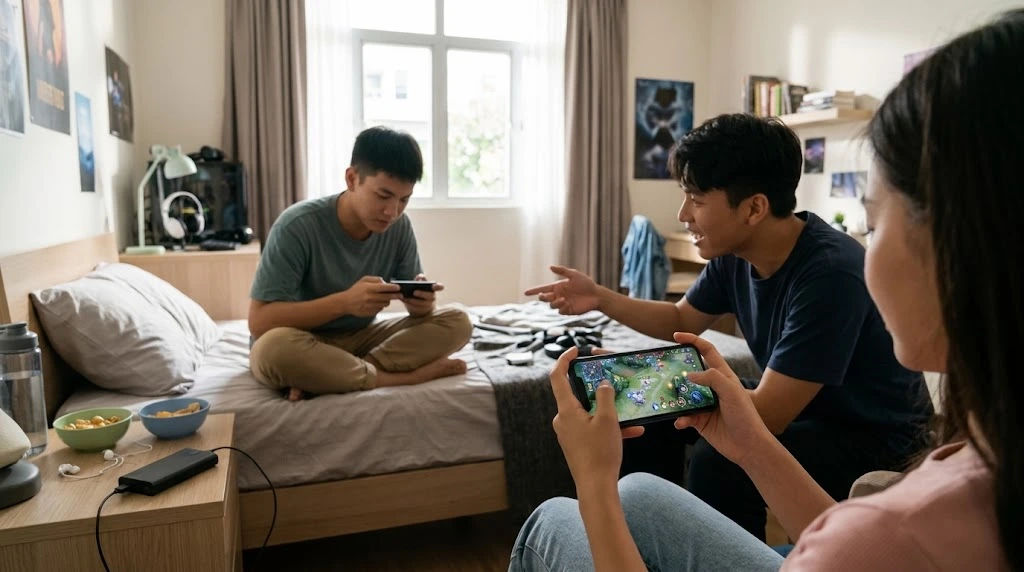
The introduction of fifth-generation mobile networks has created new opportunities for Mobile App Gaming by offering faster data speeds, lower latency, and improved network capacity. These features can make cloud gaming more responsive and enjoyable, particularly for people who want to play demanding games on ordinary smartphones. A stable 5G connection can reduce delays between player actions and on-screen responses, helping create a smoother experience.
However, 5G is not automatically a solution to every cloud gaming problem. Network coverage, server locations, data limits, device compatibility, and internet congestion can still affect performance. Understanding how these factors work together can help players decide whether upgrading to a 5G connection is worthwhile.
Cloud Gaming Technology
Cloud gaming allows users to play video games that are processed on remote servers rather than directly on their smartphones. The server runs the game, generates the graphics, and streams the resulting video to the player's device.
The player controls the game through touchscreen commands, a connected controller, or another supported input method. These commands travel through the internet to the remote server, where the game responds and sends updated images back to the device.
This process happens continuously while someone is playing. Therefore, a reliable internet connection is essential.
How Cloud Gaming Works
Cloud gaming generally involves several important steps:
-
The player opens a cloud gaming application or supported gaming service.
-
The application connects to a remote gaming server.
-
The server processes the game using its own hardware.
-
The resulting video is compressed and transmitted over the internet.
-
The player's device displays the streamed gameplay.
-
Player commands travel back to the server to control the game.
Every step depends on communication between the device and the remote server.
Mobile App Gaming pk365 connection becomes slow or unstable, players may experience delayed controls, blurry graphics, buffering, or unexpected disconnections.
Why Internet Connectivity Matters
Traditional mobile games often perform most calculations directly on the device. Cloud games depend much more heavily on continuous communication.
Even a powerful smartphone cannot completely overcome a weak internet connection when the game runs remotely.
For this reason, network performance becomes one of the most important factors in cloud gaming. A connection must deliver sufficient bandwidth while maintaining low latency and consistent data transmission.
How 5G Technology Improves Cloud Gaming
5G is the fifth generation of mobile network technology. It was developed to provide faster communication, greater capacity, and improved responsiveness compared with earlier mobile network generations.
These improvements can support cloud gaming in several ways.
Faster Download and Upload Speeds
One of the most noticeable advantages of 5G is its potential to provide higher data speeds.
Cloud gaming requires continuous video streaming. Depending on the service and graphics quality, games may need a substantial amount of bandwidth to deliver clear images without interruptions.
A faster connection allows devices to receive larger amounts of video data more efficiently.
It can also help transmit player commands to remote servers quickly.
For example, someone playing a racing game may benefit from a connection that delivers gameplay video smoothly while sending steering and acceleration commands without unnecessary delays.
However, actual speeds depend on network coverage, signal quality, available spectrum, and the mobile operator.
Reduced Network Latency
Latency refers to the time required for information to travel between two points.
In cloud gaming, latency affects how quickly the server responds after a player performs an action.
Imagine pressing a button to jump in an online adventure game. The command must travel to the remote server, be processed, and return as updated gameplay.
If this process takes too long, the character may jump noticeably after the player presses the button.
5G can reduce network latency under suitable conditions. This improvement is especially useful for competitive games, racing titles, action adventures, and other games that require precise timing.
Lower latency can make controls feel more natural and responsive.
Better Network Capacity
Mobile networks serve many users simultaneously. When too many devices connect to the same network area, performance may decline.
5G introduces technologies designed to improve network capacity and manage large numbers of connected devices.
This can benefit people playing cloud games in busy locations such as shopping centres, public transport stations, universities, and residential areas.
Nevertheless, performance still depends on the operator's network infrastructure and the number of active users.
Can 5G Make Cloud Mobile App Gaming Smoother?
Yes, 5G can make cloud gaming smoother when the network provides reliable coverage, sufficient bandwidth, and low latency.
Smooth gameplay is not determined by speed alone. Several technical factors work together to create a responsive experience.
Fewer Video Interruptions
Cloud games continuously transmit video from remote servers.
If the connection cannot maintain the required data rate, the application may lower video quality, pause temporarily, or display a buffering screen.
A strong 5G connection can provide the bandwidth needed to maintain a consistent video stream.
This is particularly useful when playing games with detailed environments, fast movement, and frequent visual changes.
More Responsive Controls
Control responsiveness is essential for an enjoyable gaming experience.
A slight delay may not matter much in a simple puzzle game, but it can create serious difficulties in a competitive shooting or racing game.
By reducing network delays, 5G can help player commands reach cloud servers more quickly.
This can improve the overall feeling of control.
However, the complete response time also depends on server processing, video encoding, decoding, and display refresh rates.
Improved Graphics Streaming
Cloud gaming services can stream high-resolution graphics without requiring the smartphone to render every scene locally.
A strong connection can help maintain higher streaming resolutions and smoother frame delivery.
Players may therefore enjoy more detailed environments, sharper textures, and better visual quality.
The available graphics quality still depends on the gaming service, subscription plan, server hardware, and smartphone display.
Important Factors That Affect 5G Cloud Gaming Performance
Although 5G offers several advantages, the quality of the gaming experience depends on more than the network generation.
Players should understand the following factors before expecting major improvements.
5G Network Coverage
5G availability varies between cities, neighbourhoods, and individual buildings.
A smartphone may support 5G but still receive a weak signal in certain locations.
Thick walls, underground spaces, physical obstacles, and distance from mobile towers can affect signal strength.
If coverage is poor, the device may switch to a slower network.
For consistent cloud gaming, players should check whether their usual gaming locations have reliable 5G coverage.
Network Congestion
Even a fast mobile network can become congested.
When many people use the same network resources, available bandwidth may decrease.
This can happen during busy evenings, public events, or crowded commuting hours.
Network congestion may cause higher latency, inconsistent streaming quality, and occasional interruptions.
Players should test their connection during the hours when they normally play rather than relying only on speed tests performed during quiet periods.
Distance From Cloud Gaming Servers
The physical distance between a player and the cloud gaming server can influence latency.
Data must travel between the smartphone and the server through different network connections.
A server located far away may introduce additional delays.
Even a high-speed 5G connection cannot completely eliminate the time required for data to travel across long distances.
Gaming providers that operate servers closer to their customers can help reduce this problem.
Smartphone Compatibility
Not every smartphone supports 5G.
Older devices may be limited to 4G networks, even when the mobile operator provides 5G coverage.
Players should check their smartphone specifications before purchasing a new mobile plan.
They should also consider processor performance, memory, display quality, and Wi-Fi capabilities.
Although cloud gaming reduces the need for powerful local graphics hardware, the device must still decode video streams and run the gaming application efficiently.
5G vs 4G for Cloud Gaming
Both 4G and 5G can support cloud gaming, but they offer different levels of performance.
The best option depends on local network conditions and the requirements of the gaming service.
|
Feature |
4G |
5G |
|---|---|---|
|
Data speeds |
Generally lower |
Potentially much higher |
|
Latency |
Generally higher |
Potentially lower |
|
Network capacity |
More limited |
Improved capacity |
|
Video streaming |
Supports cloud gaming |
Better potential for high-quality streaming |
|
Congestion handling |
Can struggle in busy areas |
Designed for improved capacity |
|
Coverage |
Widely available |
Depends on location |
When 4G May Be Enough
Not every cloud game requires a 5G connection.
Casual games, turn-based adventures, and less demanding titles may work well over a stable 4G network.
Players with strong 4G coverage and suitable data plans may not notice a major difference when switching to 5G for simpler games.
The most important consideration is whether the existing connection can maintain the required streaming quality.
When 5G Provides a Bigger Advantage
5G can be particularly beneficial when playing demanding cloud games that require frequent communication with remote servers.
Competitive multiplayer games, fast racing games, and visually detailed action titles may benefit from lower latency and higher bandwidth.
Players who frequently experience buffering or inconsistent video quality on congested 4G networks may also appreciate the additional capacity offered by 5G.
Does 5G Improve Multiplayer Cloud Gaming?
Multiplayer cloud games involve communication between several players, gaming servers, and individual devices.
Every player needs a reasonably responsive connection to participate effectively.
5G can improve this experience by supporting faster communication and reducing certain network delays.
Better Real-Time Communication
In multiplayer games, actions must be transmitted and processed quickly.
A player moving through a competitive arena needs the game to display accurate positions and respond to commands.
Lower network latency can reduce the delay between an action and its registration by the server.
This may help create more consistent gameplay.
However, other players' connections and the game's server infrastructure also influence the experience.
Reduced Lag During Competitive Matches
Lag can affect important moments in competitive gaming.
A player might press a shooting button, but the action may appear late because information has not reached the server quickly enough.
5G can help reduce network-related delays when local conditions are suitable.
It cannot eliminate all lag because problems can also originate from server performance, routing, software, and device processing.
More Stable Gaming Sessions
A stable connection is important during long multiplayer sessions.
Unexpected interruptions can disconnect players from matches or cause them to lose progress.
5G's improved capacity may help maintain a more consistent connection in areas with good infrastructure.
However, mobile signals can fluctuate as users move between coverage areas, so a strong connection is not guaranteed everywhere.
Does 5G Increase Mobile Gaming Data Consumption?
5G does not automatically cause every game to consume more data.
Data consumption mainly depends on the gaming service, streaming resolution, frame rate, video compression, and playing time.
However, 5G makes it easier to stream higher-quality video, which may increase data usage when applications automatically select better settings.
High-Resolution Streaming Uses More Data
Cloud gaming platforms often allow users to choose different streaming qualities.
Higher resolutions generally require more data because the service must transmit additional visual information.
For example, streaming at 1080p may consume more data than streaming at 720p, depending on compression and frame rate.
A player using a limited mobile data package should monitor consumption carefully.
Managing Mobile Data Usage
Players can control data consumption through several practical steps:
-
Select a lower streaming resolution when necessary.
-
Check whether the gaming application offers data-saving settings.
-
Monitor mobile data usage through smartphone settings.
-
Avoid unnecessary background downloads.
-
Use a reliable Wi-Fi connection for large updates.
-
Check the data limits included in the mobile subscription.
These habits help players enjoy cloud gaming without unexpected data expenses.
Does 5G Affect Smartphone Battery Life?
Cloud gaming already places certain demands on smartphone batteries.
The screen remains active, the device continuously receives video, and the processor handles decoding and application functions.
Using 5G can add further battery demands, particularly when signal strength is weak.
Battery Consumption During 5G Gaming
Maintaining a mobile network connection requires energy.
When a smartphone struggles to maintain a weak 5G signal, it may consume additional power while searching for or switching between network connections.
Long gaming sessions can therefore reduce battery life.
Screen brightness, refresh rate, speaker volume, and device temperature also influence energy consumption.
Ways to Improve Battery Performance
Players can take several steps to reduce battery usage:
-
Lower screen brightness to a comfortable level.
-
Close unnecessary background applications.
-
Avoid playing while the smartphone is overheating.
-
Use battery-saving settings when supported.
-
Reduce streaming quality when maximum resolution is unnecessary.
-
Keep the device software updated.
Good battery management can make longer gaming sessions more comfortable.
Can 5G Replace Wi-Fi for Cloud Gaming?
5G can provide an alternative to Wi-Fi, particularly when users are away from home.
A strong mobile connection may deliver sufficient speed and responsiveness for cloud gaming.
This allows players to enjoy games in places where reliable Wi-Fi is unavailable.
However, the choice between 5G and Wi-Fi depends on individual circumstances.
Advantages of 5G
5G provides mobility and does not require users to connect to a particular wireless router.
It can be useful while travelling, waiting in public spaces, or visiting locations without reliable broadband.
It also allows players to access cloud gaming through a compatible mobile subscription.
Advantages of Wi-Fi
A good home Wi-Fi connection can provide consistent performance without consuming a mobile data allowance.
Wi-Fi connected to reliable broadband may also offer stable speeds and lower costs for extended gaming sessions.
The quality depends on router placement, broadband performance, wireless interference, and the number of connected devices.
Neither option is automatically better in every situation.
Players should compare actual performance rather than choosing a connection simply because it uses newer technology.
How to Prepare Your Smartphone for 5G Cloud Gaming
Getting the best experience requires more than purchasing a 5G-compatible smartphone.
A few simple adjustments can help improve performance.
Check Device and Network Compatibility
First, confirm that the smartphone supports the 5G bands used by the mobile operator.
Then check whether the current mobile package includes 5G access.
Having a compatible device does not guarantee that 5G service is available in every location.
Update Gaming Applications
Developers regularly release updates that improve application performance, fix errors, and introduce compatibility improvements.
Keeping cloud gaming applications updated can help prevent avoidable technical problems.
Smartphone operating system updates may also improve network management and device stability.
Choose Suitable Streaming Settings
Players should select streaming settings according to their connection quality.
Higher resolution is useful when the connection can maintain a consistent data rate.
However, reducing resolution or frame rate may provide a more stable experience when network conditions fluctuate.
Monitor Network Performance
Testing the connection during actual gaming sessions can reveal problems that ordinary speed tests may not identify.
Players should pay attention to:
-
Download speed.
-
Upload speed.
-
Network latency.
-
Connection stability.
-
Packet loss.
-
Signal strength.
Packet loss occurs when data fails to reach its destination. Even a fast connection can deliver poor gaming performance when packet loss is frequent.
The Future of 5G and Cloud Mobile App Gaming
The relationship between 5G and cloud gaming is likely to become increasingly important as mobile networks and gaming platforms develop.
Faster connections may allow developers to create experiences that depend less on local device hardware.
This could make advanced games accessible to a wider audience.
More Accessible High-Quality Games
Cloud technology can reduce the need for expensive gaming smartphones.
Players may be able to access demanding titles through affordable devices that support video streaming.
This could make high-quality gaming more accessible to people who cannot afford dedicated gaming hardware.
Better Support for Advanced Gaming Experiences
As network infrastructure improves, cloud gaming providers may offer more detailed graphics, higher frame rates, and responsive multiplayer experiences.
Developments in video compression and server processing may further improve performance.
5G can support these improvements by providing stronger communication capabilities.
The Role of Future Network Technologies
Although 5G is an important development, network technology will continue evolving.
Future generations may offer additional improvements in speed, reliability, and responsiveness.
However, better connectivity alone will not solve every challenge.
Cloud server availability, software optimization, data affordability, and device compatibility will remain important.
Conclusion
5G has the potential to significantly improve cloud gaming by offering faster data speeds, lower latency, and better network capacity. These features can help reduce buffering, improve control responsiveness, and support higher-quality video streaming. For players who enjoy competitive games, racing titles, and visually demanding adventures, these improvements can make a noticeable difference.
However, the benefits of 5G depend on several conditions. Reliable coverage, nearby cloud gaming servers, compatible smartphones, and suitable mobile data packages all contribute to the overall experience. A weak 5G signal may perform worse than a strong and stable 4G or Wi-Fi connection.
Players should also consider battery consumption and mobile data usage before moving their entire gaming routine to a 5G connection. Selecting appropriate streaming settings, updating applications, and monitoring network performance can help avoid common problems.
Ultimately, 5G can make Mobile App Gaming more flexible, responsive, and accessible by allowing smartphones to connect with powerful remote gaming systems. It does not eliminate every technical limitation, but it provides an important foundation for the future of cloud gaming. As mobile networks improve and gaming platforms become more advanced, players can expect increasingly convenient ways to enjoy high-quality games without depending entirely on expensive local hardware.