
Yes, content marketing services can generate leads when content is planned around the needs, questions, and buying journey of a specific audience. Instead of directly pushing a product or service, content marketing attracts potential customers by providing useful information and helping them understand a problem or opportunity.
Businesses today have many ways to reach customers, but people often research extensively before making a purchase. They may read blog posts, compare solutions, watch videos, check case studies, and look for answers to common questions. Helpful content allows a business to become part of that research process.
Lead generation happens when interested readers take the next step. They might fill out a contact form, subscribe to an email list, download a guide, request a consultation, or contact a sales team. The quality and relevance of the content can influence whether visitors are willing to take that step.
What Is Content Marketing?
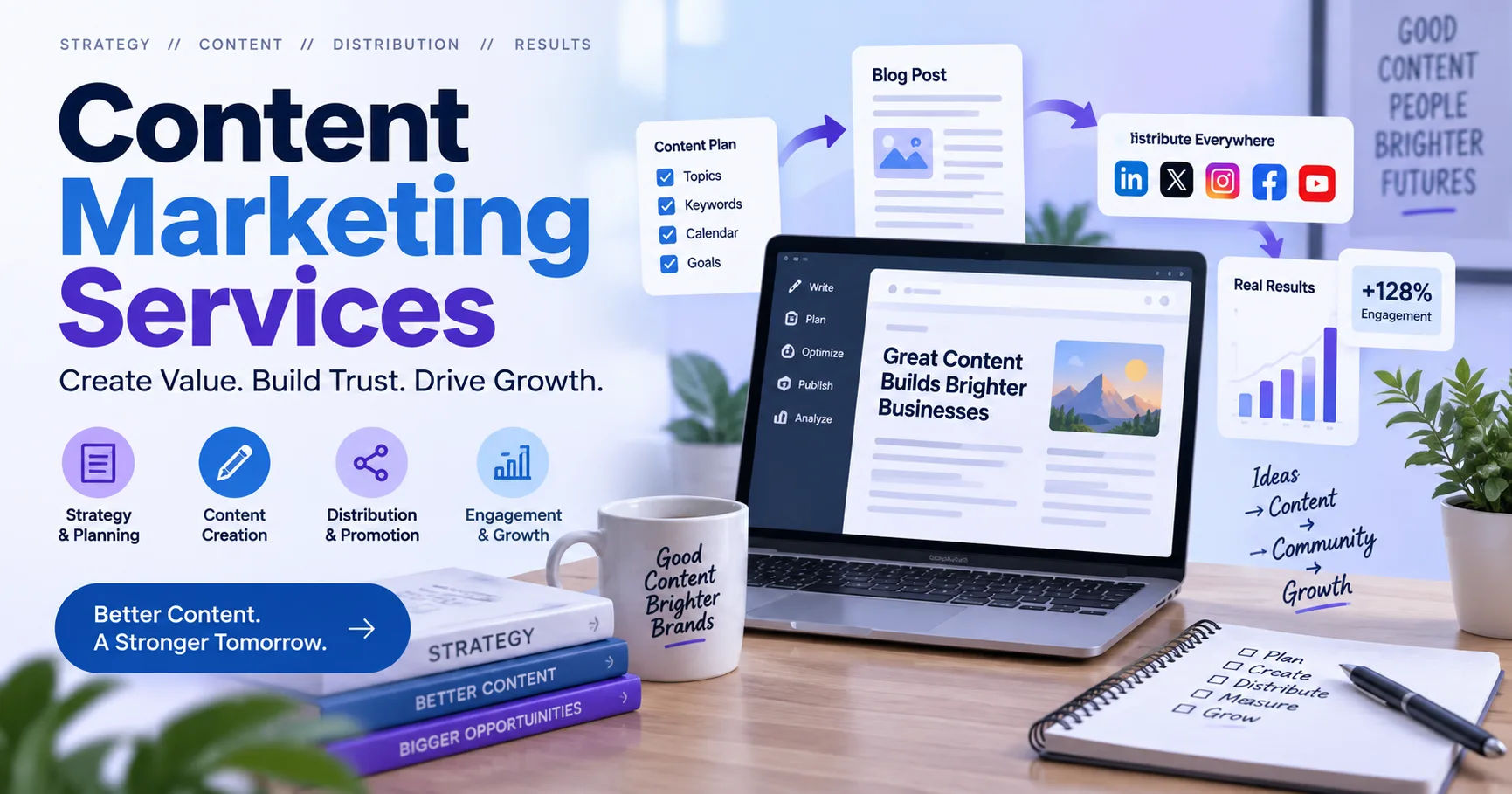
Content marketing is a strategy that involves creating and distributing useful, relevant, and consistent content for a particular audience. The purpose is not simply to publish articles. It is to attract the right people, answer their questions, build trust, and eventually encourage meaningful business actions.
Content can take many forms. Blog posts are common, but businesses can also use videos, guides, case studies, newsletters, infographics, ebooks, webinars, and other educational resources.
For example, a company selling accounting software could publish articles about managing business expenses, preparing financial reports, and choosing accounting tools. Someone searching for these topics may discover the company through search engines.
If the visitor finds the information useful, they may explore the company's services or sign up for a free consultation. This creates an opportunity for the business to turn a content visitor into a lead.
How Content Marketing Supports Lead Generation
Lead generation usually does not happen from a single piece of content. It is often the result of several interactions between a potential customer and a business.
A person may first discover a blog post through Google. Later, they may see the company's social media content. Eventually, they might download a guide or contact the company.
This process makes content particularly useful for businesses with longer buying cycles.
Attracting the Right Audience
The first step is attracting people who are actually interested in what a business offers.
A company can create content around topics that potential customers are already searching for. When those topics match the company's products or services, the traffic generated by the content can become valuable.
For instance, a web design company could publish content about website development costs, mobile-friendly design, website mistakes, and conversion optimization.
These topics are relevant to people who may eventually need professional web design services.
Building Trust Through Useful Information
People are more likely to consider a business when they believe that the business understands their problems.
Useful content can demonstrate knowledge without requiring a visitor to make a purchase immediately.
A detailed article can explain a complicated issue, answer common questions, or provide practical guidance. Over time, repeated exposure to helpful content can make a company more familiar to its audience.
Trust is especially important for professional services because customers may want evidence that a provider understands their situation before sharing their contact information.
Supporting Search Engine Visibility
Search engines are another important part of content-driven lead generation.
Businesses can create pages around relevant search terms and questions. When these pages provide useful answers and meet search intent, they may attract organic visitors.
Organic search traffic can be valuable because people are actively looking for information, products, or services.
However, publishing content does not automatically guarantee high search rankings. Search performance depends on factors such as relevance, content quality, competition, website authority, technical SEO, and search intent.
Different Types of Content That Can Generate Leads
Not every content format serves the same purpose. Different formats can support different stages of the customer journey.
Blog Posts
Blog posts are one of the most common tools for attracting potential customers.
A well-researched article can answer a specific question and introduce readers to a company's expertise. Informational articles are particularly useful for reaching people who are still researching their options.
A strong blog post should provide genuine value rather than simply repeating keywords.
Case Studies
Case studies can be powerful because they show how a business solved a real customer's problem.
Instead of only explaining what a company does, a case study can describe the original challenge, the approach taken, and the results achieved.
This type of content can be particularly helpful for visitors who are already considering a purchase.
Ebooks and Guides
Longer resources can be offered in exchange for contact information.
For example, a digital marketing company might create a guide covering the basics of online advertising. Visitors could receive the guide after submitting their name and email address.
The resulting contact becomes a potential lead that the business can nurture through appropriate follow-up.
Webinars
Webinars allow businesses to educate an audience while creating opportunities for direct interaction.
A webinar can address a specific problem and provide practical advice. Registration information can also help businesses understand who is interested in a particular subject.
Videos
Video content can explain complex subjects quickly and make information easier to understand.
Businesses can use videos for demonstrations, tutorials, frequently asked questions, product explanations, interviews, and educational content.
A video can also direct viewers toward a landing page, newsletter, consultation, or another relevant resource.
The Role of Calls to Action
Even excellent content may generate few leads if visitors do not know what to do next.
This is where calls to action, commonly called CTAs, become important.
A CTA gives readers a clear next step. It might say that they can request a consultation, download a guide, subscribe to updates, contact an expert, or explore a related service.
The CTA should match the reader's stage in the buying journey.
For example, someone reading a beginner's guide may not be ready to schedule a sales call. Offering a useful checklist or newsletter subscription could be more appropriate.
On the other hand, someone reading a detailed comparison of service providers may be closer to making a decision and could be ready for a consultation.
Why Landing Pages Matter
A landing page is designed to encourage a specific action.
Sending every visitor to a generic homepage may create unnecessary distractions. A focused landing page can explain the offer, highlight its benefits, address concerns, and provide a clear conversion opportunity.
For example, an article about business website redesign could link to a landing page offering a free website assessment.
The landing page should provide enough information to help visitors understand the offer while keeping the desired action clear.
Content for Different Stages of the Buying Journey
One reason content marketing can generate leads is that it can support customers at different stages.
Awareness Stage
At this stage, people are usually identifying a problem or learning about a topic.
Educational blog posts, videos, guides, and social media content can help attract these visitors.
The goal is to answer questions rather than immediately push a sale.
Consideration Stage
At the consideration stage, visitors are evaluating possible solutions.
Comparison articles, detailed guides, case studies, expert explanations, and webinars can help them understand their options.
This content can also demonstrate a company's experience and approach.
Decision Stage
People at the decision stage are closer to contacting a provider or purchasing a product.
Service pages, testimonials, case studies, pricing information, consultations, demos, and detailed product information can support their decision.
A good content strategy connects these stages instead of focusing on only one.
How Content Marketing Services Improve Lead Generation
Professional content marketing services can help businesses develop a structured approach rather than publishing random articles.
A service provider may begin by researching the target audience and identifying important topics. Keyword research can then help identify relevant search opportunities.
Content can be planned around business goals, customer questions, and different stages of the buying process.
The strategy may also include content creation, SEO optimization, distribution, performance tracking, and updates.
This structured approach can make content more consistent and easier to measure.
Measuring Lead Generation From Content
Businesses should measure more than website traffic.
Traffic tells you how many people visited a page, but it does not necessarily show whether those visitors became potential customers.
Important metrics can include:
- Form submissions
- Consultation requests
- Email subscriptions
- Content downloads
- Demo requests
- Conversion rate
- Qualified leads
- Lead-to-customer rate
- Cost per lead
These measurements help businesses understand which content contributes to actual business outcomes.
For example, one article may attract 10,000 visitors but produce very few inquiries. Another article may attract only 1,000 visitors but generate several qualified leads.
The second article could therefore have greater practical value for a lead-focused business.
Common Mistakes That Reduce Lead Generation
Content marketing is not automatically effective simply because a business publishes frequently.
One common mistake is creating content without understanding the audience. If an article does not address a genuine customer need, it may receive little engagement.
Another mistake is focusing entirely on search engines instead of readers. Keyword optimization can support visibility, but content should remain useful and natural.
Weak CTAs are another problem. If visitors cannot identify the next step, they may leave without taking action.
Businesses can also make the mistake of expecting immediate results. Content often requires time to build visibility, authority, traffic, and trust.
How to Create a Lead-Focused Content Strategy
A practical strategy begins with clear business goals.
The company should identify what type of leads it wants and which customers it wants to reach.
Next, it can research customer questions and problems. These insights can become the foundation for content topics.
The business should then create content for different stages of the buying journey.
Each important page should have an appropriate next step, such as a related article, downloadable resource, consultation, or contact opportunity.
Finally, performance should be reviewed regularly. Content that performs well can be updated, expanded, or repurposed.
Can Small Businesses Benefit From Content Marketing?
Yes. Content marketing is not limited to large companies.
A small business can create highly specific content for its local market or niche audience.
For example, a local home repair company could publish articles answering questions about common appliance problems, repair costs, maintenance, and replacement decisions.
Such content can help the company appear when local customers are researching those problems.
Small businesses may also have an advantage in creating specialized content because they can focus closely on the questions and experiences of their particular customers.
How Long Does It Take to Generate Leads?
There is no universal timeline.
Results can depend on the industry, competition, website authority, content quality, search demand, promotional activity, and conversion process.
Some content may generate inquiries shortly after publication if it reaches people with strong purchase intent. Other content may take months to build organic visibility.
For this reason, businesses should evaluate content performance over an appropriate period rather than judging an entire strategy based on a few days or weeks.
The Importance of Consistency
Consistency does not necessarily mean publishing as much content as possible.
A better approach is to maintain a realistic publishing schedule and focus on quality and relevance.
Regularly publishing useful content can expand the number of topics a website covers and create more opportunities to attract potential customers.
Existing content should also be reviewed. Older articles may become outdated, lose rankings, or contain information that needs revision.
Updating valuable content can help maintain its usefulness.
Conclusion
Content marketing can generate leads when it is connected to clear customer needs and business objectives. The process typically involves attracting relevant visitors, providing useful information, building trust, and giving interested people a clear opportunity to take the next step.
Content marketing services can support this process by helping businesses with audience research, topic planning, content creation, SEO, distribution, conversion opportunities, and performance measurement.
The most effective strategy is not simply to publish large amounts of content. It is to create the right content for the right audience at the right stage of the buying journey.
Blog posts can attract people who are researching problems. Guides and case studies can help people evaluate solutions. Landing pages and consultations can support visitors who are closer to making a decision.
Businesses should also measure results beyond traffic. Leads, conversion rates, qualified inquiries, and eventual customers provide a clearer picture of whether content is contributing to growth.
When content is useful, relevant, well-optimized, and connected to a clear conversion path, it can become a valuable part of a long-term lead generation strategy.