
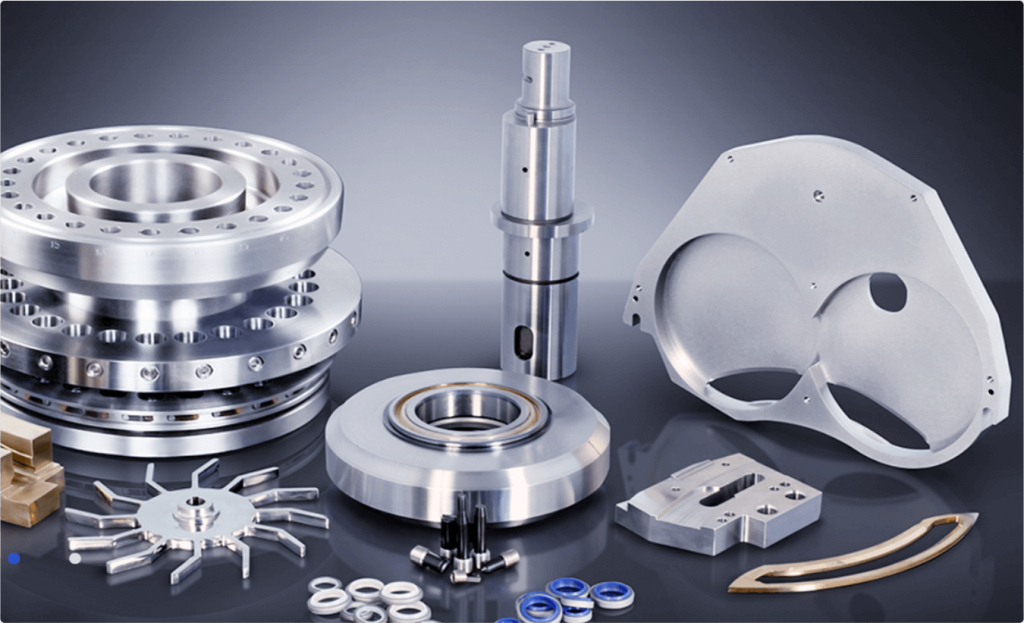
The worldly concern of CNC machining services is constantly evolving, impelled by advancements in technology and dynamical industry demands. This clause explores the latest trends and innovations formation the futurity of custom CNC parts and online custom cnc parts machining services.
The world of CNC (Computer Numerical Control) machining services is undergoing a profound transformation, driven by rapid advancements in technology and ever-changing industry demands. As industries strive for greater precision, efficiency, and sustainability, CNC machining is at the forefront of this evolution. This article delves into the latest trends and innovations that are shaping the future of custom CNC parts and online CNC machining services, highlighting how these developments are revolutionizing manufacturing processes across the globe.
1. Automation and Robotics: Revolutionizing Production
Automation has become a cornerstone of modern manufacturing, and CNC machining is no exception. The integration of robotics into CNC machining processes is enabling faster production cycles, reduced labor costs, and enhanced precision. Robotic arms are now being seamlessly integrated with CNC machines to perform tasks such as loading raw materials, unloading finished parts, and even inspecting components for quality assurance.
This shift toward automation is particularly beneficial for high-volume production runs, where consistency and speed are critical. By automating repetitive tasks, manufacturers can allocate human resources to more complex and creative aspects of production, thereby increasing overall productivity. Furthermore, the use of robotics minimizes the risk of human error, ensuring that each custom CNC part meets stringent quality standards.
2. 5-Axis Machining: Unparalleled Precision and Flexibility
One of the most significant advancements in CNC machining is the adoption of 5-axis machining technology. Unlike traditional 3-axis machines, which operate along the X, Y, and Z axes, 5-axis machines can rotate along two additional axes, providing greater flexibility and precision. This capability allows manufacturers to produce highly complex custom CNC parts in a single setup, reducing the need for multiple machine configurations and minimizing production time.
5-axis machining is particularly valuable in industries such as aerospace, automotive, and medical devices, where intricate geometries and tight tolerances are often required. For example, aerospace components like turbine blades and engine parts demand exceptional precision, which 5-axis machines can deliver with ease. Similarly, in the medical field, the ability to create complex, patient-specific implants has revolutionized healthcare outcomes.
3. Artificial Intelligence and Machine Learning: Optimizing Processes
Artificial intelligence (AI) and machine learning are making significant inroads into CNC machining, offering unprecedented opportunities for optimization and efficiency. AI-driven software can analyze vast amounts of data from previous machining jobs to identify patterns, optimize toolpaths, and predict potential issues before they arise. This data-driven approach not only enhances the accuracy of custom CNC parts but also reduces material waste and energy consumption.
Machine learning algorithms are also being used to improve predictive maintenance, ensuring that CNC machines operate at peak performance. By monitoring machine conditions in real-time, manufacturers can identify signs of wear and tear and schedule maintenance proactively, minimizing downtime and extending the lifespan of their equipment. This level of intelligence is transforming CNC machining into a more reliable and cost-effective process.
4. Additive Manufacturing Integration: The Rise of Hybrid Manufacturing
The integration of CNC machining with additive manufacturing (3D printing) is opening up new possibilities for hybrid manufacturing. This approach combines the strengths of both technologies, allowing manufacturers to create custom CNC parts with complex internal structures and reduced material waste. For instance, 3D printing can be used to produce near-net-shape components, which are then finished with CNC machining to achieve the desired tolerances and surface finishes.
Hybrid manufacturing is particularly advantageous for industries that require lightweight yet durable components, such as aerospace and automotive. By leveraging the design freedom of 3D printing and the precision of CNC machining, manufacturers can produce parts that were previously impossible or prohibitively expensive to create. This synergy is driving innovation and expanding the boundaries of what is achievable in manufacturing.
5. Online CNC Machining Services: Democratizing Access to High-Quality Manufacturing
The rise of online CNC machining services is democratizing access to high-quality manufacturing, making it easier for businesses of all sizes to obtain custom CNC parts. These platforms offer a user-friendly interface where customers can upload their designs, select materials, and receive instant quotes. The convenience and accessibility of online services are particularly beneficial for startups and small businesses that may not have the resources to invest in in-house machining capabilities.
As the demand for online CNC machining services grows, these platforms are incorporating more advanced features to enhance the user experience. For example, AI-driven design optimization tools can analyze a customer's design and suggest improvements to reduce costs or improve manufacturability. Real-time collaboration tools are also being integrated, allowing customers to communicate directly with engineers and make adjustments to their designs on the fly. This level of interactivity is transforming the way custom CNC parts are produced, making the process more efficient and collaborative.
6. Sustainability Initiatives: Embracing Eco-Friendly Practices
Sustainability is becoming a top priority for industries worldwide, and CNC machining services are no exception. Manufacturers are increasingly adopting eco-friendly practices to reduce their environmental impact. This includes using recycled materials, implementing energy-efficient machining processes, and minimizing material waste through advanced software and toolpath optimization.
For example, some CNC machining services are now offering biodegradable or recyclable materials as alternatives to traditional metals and plastics. Additionally, the use of energy-efficient CNC machines and the integration of renewable energy sources into manufacturing facilities are helping to reduce the carbon footprint of CNC machining operations. These sustainability initiatives not only benefit the environment but also align with the growing demand for greener manufacturing practices from consumers and businesses alike.
Conclusion: A Bright Future for CNC Machining Services
The future of CNC machining services is undeniably bright, with innovations such as automation, 5-axis machining, AI, hybrid manufacturing, and online platforms driving the industry forward. These advancements are not only enhancing the precision and efficiency of custom CNC parts but also making high-quality manufacturing more accessible and sustainable.
As industries continue to evolve, businesses that embrace these trends will be well-positioned to stay competitive in a rapidly changing market. By leveraging the latest technologies and adopting eco-friendly practices, CNC machining services are poised to play a pivotal role in shaping the future of manufacturing. Whether it's producing complex aerospace components or enabling small businesses to bring their ideas to life, CNC machining is at the heart of modern innovation, and its potential is limitless.