
Fashion brands do not always begin with thousands of pieces. New labels, small online stores, independent designers, and growing businesses often need to test a product before making a large investment. This is where understanding what a manufacturer requires becomes important. A smaller production run can reduce risk, but it does not mean the manufacturing process has fewer requirements.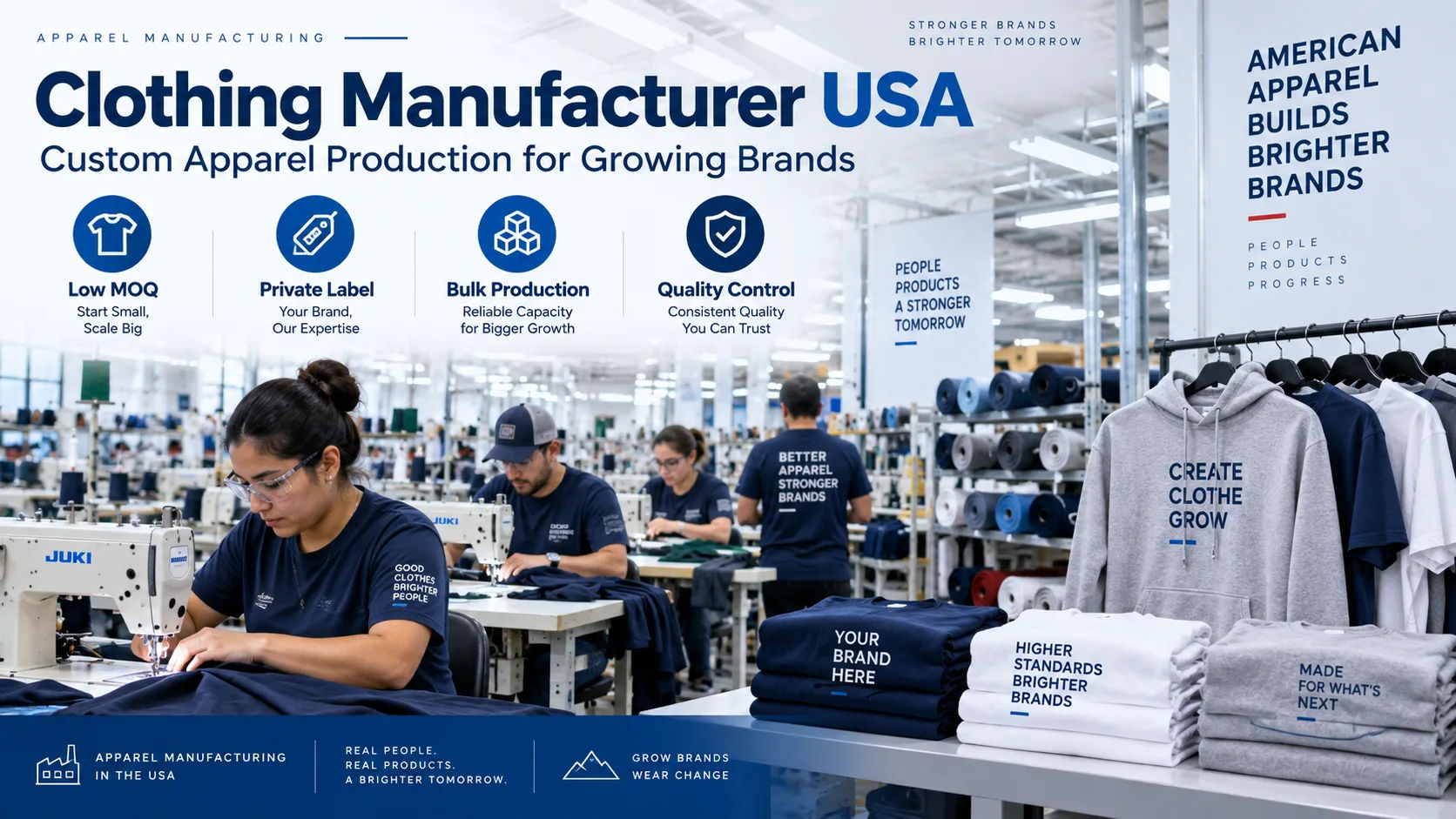
Working with a low MOQ clothing manufacturer can make it easier for a new fashion brand to produce limited quantities without committing to a huge inventory. However, manufacturers still need accurate product information, suitable materials, clear specifications, and realistic production expectations before they can turn an idea into finished clothing.
The exact requirements vary from one factory to another. Some manufacturers offer flexible fabric sourcing, while others expect the client to provide materials. Some handle pattern making and samples in-house, while others charge separately for these services. Knowing what to prepare before contacting a manufacturer can save time, reduce mistakes, and make the entire process smoother.
What Is a Low MOQ Fashion Manufacturer?
A low MOQ fashion manufacturer is a clothing production company that accepts smaller minimum order quantities than traditional large-scale factories.
MOQ stands for Minimum Order Quantity. It represents the smallest number of units a manufacturer is willing to produce for a particular style, color, fabric, or order.
For example, a large factory might require an order of 500 or 1,000 pieces per style. A low MOQ manufacturer may accept 20, 50, 100, or another smaller quantity depending on its production setup.
The important point is that "low MOQ" does not mean "no minimum." Every manufacturer has operating costs, labor requirements, material purchasing requirements, and production limitations.
Why Do Low MOQ Manufacturers Have Requirements?
Even a small production order requires planning.
The factory must understand what it is making, which materials are needed, how the garment should be constructed, what sizes are required, and how many pieces should be produced.
Smaller orders can actually create additional challenges for manufacturers. Fabric suppliers may have their own minimum quantities. Setting up machines takes time. Pattern development requires skilled labor. Quality control also has to be performed regardless of whether the factory produces 30 pieces or 3,000.
For this reason, a manufacturer needs sufficient information before accepting an order.
What Information Does a Manufacturer Usually Require?
Technical Product Information
The first requirement is a clear description of the garment.
You should explain whether you want T-shirts, hoodies, jackets, trousers, dresses, shirts, activewear, uniforms, or another type of clothing.
A simple product name is usually not enough.
For example, saying "I need a black hoodie" leaves many questions unanswered. The manufacturer may need to know the fabric composition, weight, fit, stitching details, hood style, pocket design, cuff construction, color, branding, and finishing requirements.
The more specific your product information is, the easier it becomes for the manufacturer to provide an accurate quotation.
Tech Pack
A tech pack is one of the most useful documents you can provide.
It usually contains technical information about the garment, including measurements, construction details, materials, colors, labels, trims, artwork placement, and other specifications.
A well-prepared tech pack reduces misunderstandings between the designer and factory.
It also gives the production team something concrete to follow during sampling and manufacturing.
If you do not have a tech pack, some manufacturers offer development services. In that case, they may create patterns and specifications based on sketches, reference garments, measurements, or samples.
Design Files
Manufacturers need to understand exactly what you want the finished garment to look like.
Depending on the product, useful design materials can include sketches, technical drawings, photographs, CAD files, artwork, logos, measurement charts, or reference samples.
For printed or embroidered garments, artwork files may need to be supplied in suitable formats and resolutions.
A manufacturer may also ask where the artwork should be positioned and how large it should appear.
Small details matter because they can affect both production time and pricing.
Fabric and Material Requirements
Fabric Type
Fabric is one of the biggest factors affecting garment quality and cost.
A manufacturer may need to know whether you want cotton, polyester, nylon, denim, linen, rayon, wool, fleece, jersey, French terry, or a blended material.
If you already have a specific fabric in mind, provide its composition and weight whenever possible.
For example, "100% cotton, 220 GSM" is much more useful than simply saying "heavy cotton."
GSM and Fabric Weight
GSM means grams per square meter and is commonly used to describe fabric weight.
A higher GSM generally indicates a heavier fabric, although weight does not automatically determine quality.
For example, a lightweight T-shirt may use a fabric around 140 to 180 GSM, while a heavier streetwear T-shirt may use a considerably higher GSM.
The manufacturer needs this information to source or reproduce the intended material correctly.
Fabric Sourcing
You should clarify whether the factory is expected to source the fabric.
Some manufacturers have established relationships with fabric mills and can handle sourcing themselves.
Others prefer clients to provide the fabric.
If the manufacturer is sourcing the material, you may need to approve fabric swatches before production begins.
This is especially important for colors and textures because a computer image rarely represents fabric accurately.
Quantity Requirements
Naturally, the manufacturer needs to know how many garments you want.
However, quantity can be more complicated than simply providing one number.
You may need to specify quantities by size and color.
For example, an order of 100 hoodies could consist of 50 black pieces, 30 gray pieces, and 20 cream pieces. The size breakdown would also need to be defined.
A low MOQ clothing manufacturer may have separate minimums for each color or style. This is something you should confirm before approving production.
Some factories calculate MOQ per design, while others calculate it per color or fabric.
Size Specifications
Manufacturers need a clear size chart.
This should ideally include measurements such as chest, shoulder width, sleeve length, garment length, waist, hip, inseam, or other measurements relevant to the garment.
Do not assume that S, M, L, and XL have identical measurements across manufacturers.
Sizing standards can vary between countries and brands.
If you already have an established size chart, provide it before sampling.
Sample Requirements
A sample allows both sides to check whether the design works before bulk production.
A manufacturer may require a sketch or reference garment before making the first sample.
The sampling stage can involve several versions.
The first sample may reveal problems with fit, proportions, fabric behavior, stitching, print placement, or construction.
You can then provide corrections before approving the final production sample.
Why Sample Approval Matters
Skipping proper sample approval can create expensive problems later.
Imagine ordering 200 jackets and discovering that the sleeves are too short or the logo is positioned incorrectly.
Fixing the problem after bulk production may be difficult or impossible.
A good low MOQ clothing manufacturer should give you a clear process for reviewing and approving samples before production starts.
Branding Requirements
Fashion manufacturers often need complete branding information.
This may include:
-
Woven labels
-
Printed neck labels
-
Size labels
-
Care labels
-
Hang tags
-
Packaging
-
Stickers
-
Custom bags
-
Branded boxes
You should specify where each branding element should be placed.
For example, a neck label may need to be sewn into the back neckline, while a woven logo label could be positioned near the side seam.
The manufacturer may also ask whether you will provide these items or expect the factory to source them.
Printing and Embroidery Requirements
If your garments include decoration, additional specifications are required.
For screen printing, the manufacturer may need artwork, colors, print dimensions, and placement details.
For embroidery, the factory may need the logo artwork and information about size, position, thread colors, and stitch style.
Embroidery files sometimes need digitizing before they can be used by an embroidery machine.
The quality of the original artwork can influence how accurately the design is reproduced.
Color Requirements
Color selection should be treated seriously.
A basic description such as "dark green" can mean different things to different people.
Professional brands may use Pantone references or approved physical swatches to establish a specific color target.
If exact color matching matters to your brand, communicate this before production.
You should also understand that different fabrics can display the same dye differently.
A color that looks perfect on a digital screen may appear slightly different once produced on cotton, polyester, fleece, or another material.
Budget and Pricing Information
A manufacturer does not necessarily require you to reveal your maximum budget, but you should understand your expected price range.
Your budget affects fabric selection, construction complexity, trims, decoration, packaging, and production quantity.
When requesting a quotation, ask what the price includes.
For example, does the quoted price cover:
-
Fabric?
-
Cutting?
-
Sewing?
-
Printing?
-
Embroidery?
-
Labels?
-
Packaging?
-
Sampling?
-
Quality control?
A low unit price can become less attractive if important services are charged separately.
Packaging Requirements
Packaging is another area that should be discussed early.
Basic packaging might involve folded garments placed in transparent bags and packed into cartons.
A fashion brand may instead require branded polybags, custom boxes, tissue paper, stickers, thank-you cards, or special folding methods.
These additions can increase both material costs and labor requirements.
If packaging is part of your brand experience, provide the specifications before finalizing the order.
Production Timeline
Manufacturers need realistic deadlines.
You should explain when you need the samples and when you expect the bulk order to be completed.
However, avoid setting an unrealistic deadline simply because you want the products quickly.
Production can involve fabric sourcing, pattern development, sampling, revisions, approval, cutting, sewing, decoration, inspection, packing, and shipping.
A low MOQ clothing manufacturer may have a faster production cycle for small orders, but this is not guaranteed.
Material availability can also change the timeline significantly.
Quality Standards
Before production starts, establish what acceptable quality means.
Discuss stitching quality, loose threads, fabric defects, measurements, color consistency, print quality, embroidery quality, stains, holes, and finishing.
You should also agree on how defective pieces will be handled.
A clear quality standard protects both the manufacturer and the brand.
Without an agreed standard, two sides may have completely different ideas about what qualifies as a defect.
Payment Requirements
Manufacturers usually establish payment terms before production.
Common arrangements may involve an upfront deposit followed by the remaining balance before shipment, although exact terms vary.
You should never assume that every factory uses the same payment structure.
Ask about:
-
Sample payment
-
Production deposit
-
Remaining balance
-
Additional development charges
-
Shipping charges
-
Refund policies
-
Cancellation terms
Get these details in writing before committing funds.
What Should You Send When Contacting a Manufacturer?
Your first message should be organized rather than vague.
A useful manufacturing inquiry can include the product type, estimated quantity, fabric preference, number of colors, sizes, branding requirements, sample requirements, target delivery date, and destination country.
Attach the relevant design files or tech pack if available.
This allows the factory to understand your project without going through several rounds of basic questions.
It also makes it easier to compare quotations from different manufacturers.
What If You Do Not Have a Tech Pack?
Not every new fashion entrepreneur has technical design experience.
That does not mean manufacturing is impossible.
Some factories provide product development services, including pattern creation, grading, sampling, and technical support.
You may be able to begin with a detailed sketch, reference garment, measurements, or photographs.
However, development services usually add cost and time.
Before proceeding, ask exactly what the manufacturer will create and how many revisions are included.
How Should You Choose the Right Manufacturer?
Price should not be your only consideration.
A factory offering the cheapest quotation may not necessarily provide the best value.
Look at its experience with your product category, communication quality, sample quality, production capabilities, minimum order quantity, quality control process, and ability to meet deadlines.
A manufacturer experienced in small production runs may understand the needs of emerging brands better than a factory designed mainly for large-volume orders.
You should also ask whether the quoted MOQ applies to the entire order or individual colors and designs.
Common Mistakes to Avoid
One common mistake is providing incomplete information.
Another is changing the design repeatedly after production has already started.
Late changes can create additional costs and delays.
Some brands also focus heavily on unit price while ignoring sampling, shipping, packaging, and development charges.
Another mistake is assuming that a small order requires less communication.
In reality, clear communication becomes even more important when producing a small collection because there is less room to absorb mistakes.
Questions to Ask Before Placing an Order
Before selecting a manufacturer, ask practical questions.
What is your MOQ per style?
Does the MOQ apply separately to each color?
Do you provide samples?
Can you develop patterns?
Can you source fabric?
What branding services are available?
What is the expected production timeline?
How do you handle defective products?
What payment terms do you use?
Can you provide a production sample for approval?
These questions can reveal important differences between manufacturers before you commit.
Benefits of Working With a Low MOQ Manufacturer
The biggest advantage is reduced inventory risk.
Instead of investing heavily in a new product, a brand can test customer demand with a smaller quantity.
This can be especially useful for new businesses that are still learning which designs, colors, and sizes sell best.
A low MOQ clothing manufacturer can also support limited collections, seasonal products, influencer merchandise, small fashion drops, and experimental designs.
Small orders can make it easier to test an idea before scaling it.
If a product performs well, the brand can then increase future production.
Potential Challenges
Low MOQ manufacturing is not perfect.
The unit cost can be higher because the factory cannot spread setup and operational costs across thousands of garments.
Fabric sourcing may also be difficult when suppliers have high material minimums.
Certain manufacturers may limit fabric colors, customization options, or construction details for small orders.
This is why brands should compare the complete production package rather than focusing only on the MOQ.
How to Make the Process Easier
Preparation is probably the biggest advantage you can give yourself.
Have your designs ready.
Prepare measurements.
Organize artwork files.
Decide your estimated quantity.
Choose your preferred materials.
Create a clear list of branding requirements.
Set a realistic deadline.
When the manufacturer receives organized information, communication becomes much easier.
It also reduces the possibility of errors caused by assumptions.
When Should You Scale Up Production?
Small-batch manufacturing is useful for testing.
Once you have reliable sales data, you may decide to increase production.
Higher quantities can sometimes reduce the per-unit manufacturing cost.
However, scaling should be based on actual demand rather than optimism.
If a product sells consistently, larger production runs may make sense. If sales remain uncertain, maintaining smaller batches can protect your cash flow.
A smart brand does not simply chase the lowest manufacturing price. It balances production cost, quality, inventory risk, customer demand, and cash flow.
Conclusion
A low MOQ fashion manufacturer still requires professional information even when the order is small. You will normally need clear product specifications, quantities, size information, fabric details, design files, branding instructions, sample approval, quality expectations, payment arrangements, and realistic production timelines.
The more complete your information is, the easier it becomes for a manufacturer to understand your requirements and provide an accurate quotation. This is particularly important when working with a low MOQ clothing manufacturer, because smaller orders often leave less room for costly mistakes.
You do not necessarily need a large fashion company, a massive budget, or thousands of units to begin manufacturing. What you do need is preparation. A clear design, practical specifications, an approved sample, and good communication can turn a small production idea into a reliable manufacturing process.
For new brands, low MOQ production can be a sensible way to test products, understand customer demand, and build a collection without carrying excessive inventory. The key is to treat a small order professionally. A small quantity does not mean small requirements.
When you understand what the manufacturer needs before placing an order, you can compare suppliers more intelligently, avoid unexpected costs, reduce production mistakes, and create a stronger foundation for future growth.